
Essential Survey Checklist for Your Laneway House
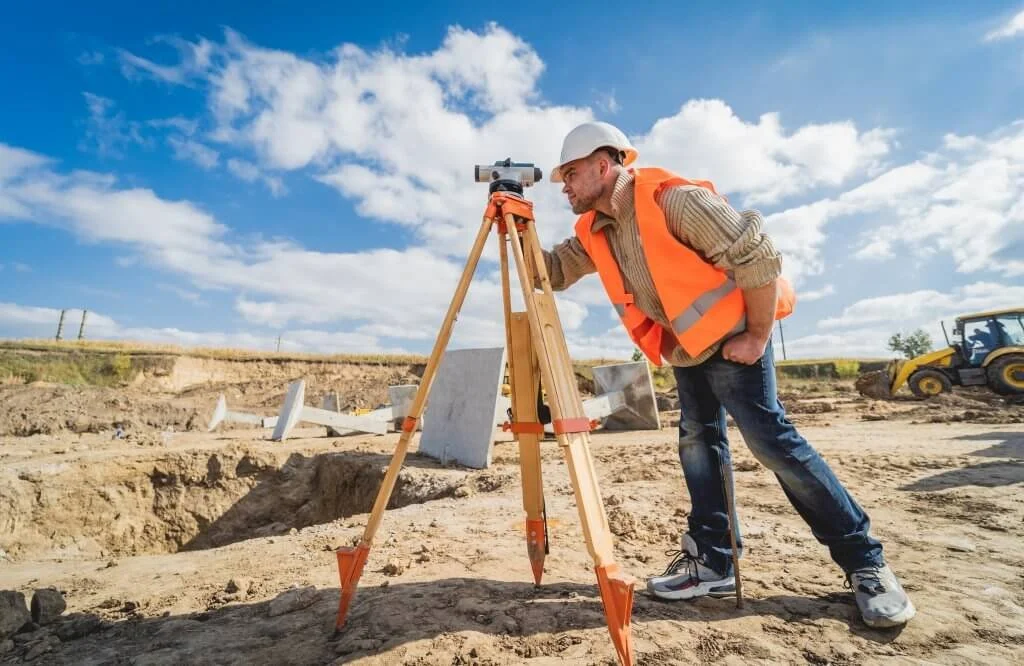
Every construction project starts with a survey. It is a precise drawing of your property that maps out elements like property lines, topography, and existing building outlines. This is the very first document we need to confirm whether a laneway house or multiplex is even possible.
A typical survey includes:
Legal description, PID, civic address, and lane name
North arrow, scale, and datum
Property lines, dimensions, lot area, and survey monuments
Existing buildings and structures with setbacks to property lines
Driveways, walkways, fences, retaining walls, and other site features
Lane width, alignment, and any ultimate property lines or dedications
Registered easements, rights-of-way, and encroachments
Utility locations and easements
Spot elevations or topographic information
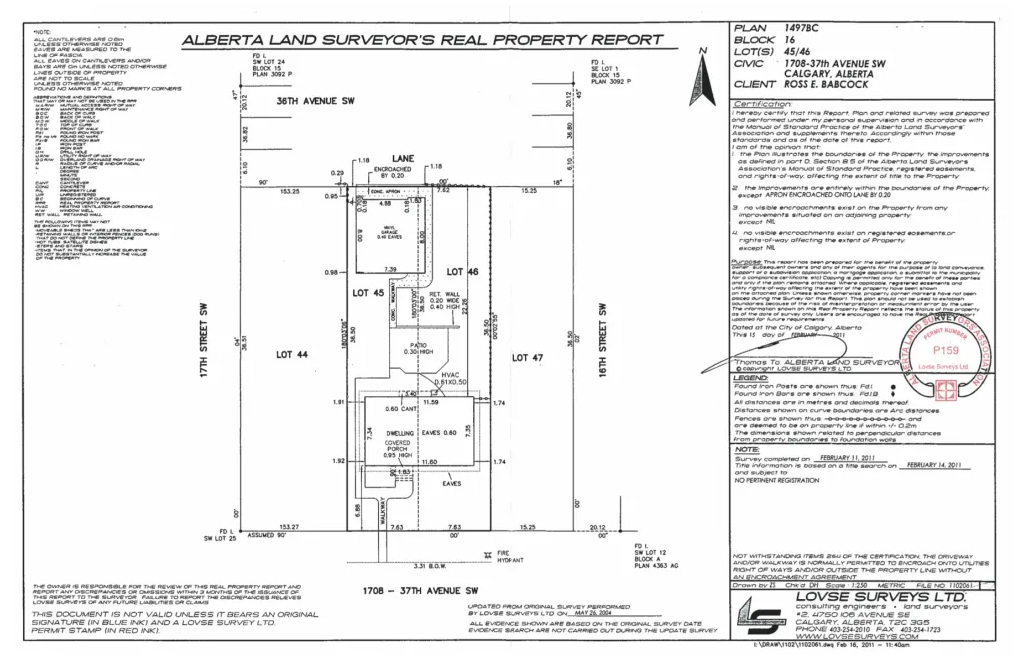
An example of a survey drawing
While most standard surveys cover the basics, they can omit information that is critical for laneway or multiplex permits.
To save time and money, make sure you explicitly ask for these 5 items:
1. Lane/Street Width and Centrelines
You need the surveyor to measure the entire width of the lane and the street, including the centrelines.
Why it matters: This is crucial for spatial separation calculations. The distance from the centreline determines how large your windows can be on the side of the house facing the lane or street. The further you are, more windows you can have.
2. The Primary House "Building Face"
Make sure the survey captures the elevation of the main house that faces your new laneway home. If your laneway house is on the west side, then get them to draw the west elevation of your house. It does not have to be detailed, just showing the outline of the house including the roofline, windows, and doors.
Why it matters: Again, this comes down to separation calculations. You need to know exactly how much window area is there to determine how much window you can have on the laneway facing the primary house.
3. Hydro Line Heights and Locations
If there are hydro poles on your side of the property, you need the heights of the three low-voltage lines and the high-voltage lines at both poles, as well as the midpoint (or the point closest to your new build).
Why it matters: BC Hydro has strict clearance requirements that override the zoning setback requirements from property lines. The setback from the rear property line is often 3 ft, but BC Hydro requires a minimum of 1.6 m (5.2 ft) setback from powerlines. If you don't have these heights and locations mapped out early, you might design a house that is legally "unbuildable" because it’s too close to the power lines.
4. Tree Sizes and Locations
Tree locations with species, diameter at breast height, and crown size.
Why it matters: You will need to know whether your building can cleverly be built around existing trees on your property or if they will have to be removed. The arborist will also review the tree locations to determine tree barrier design requirements to protect them during construction.
5. Impermeable Surfaces
Ask them to mark all paved paths, pavers, and covered areas.
Why it matters: Every lot has a limit to the amount of impermeable surfaces—60 % in Zone R1‑1. Having these measurements on the survey allows your architect to quickly calculate impermeable areas without guessing or having you measure them.
The Bottom Line
By ensuring your surveyor captures these details from day one, you provide your architect or designer with the tools to understand the parameters of the site, setback requirements, window sizes, etc. This prevents guesswork and late-stage redesigns and headaches, which can be pricy and frustrating.
Tip: The City of Vancouver and many other municipalities do not accept surveys older than 6 months. Don’t fret, as you can simply ask your surveyor to reseal the survey for a small fee.
Questions?
If you have any questions about any of the above, contact us.
